PET CARE / PETVITALS
Why excess weight matters for dogs and cats
25 October 2026 · School of Dog Wellbeing editorial team · English adaptation: 28 October 2026
Excess weight can affect joints, breathing, metabolism, movement and a pet's ability to groom. In cats it is associated with diabetes risk and greater vulnerability to serious liver disease if they stop eating. Understanding these problems helps explain why weight management is part of healthcare, rather than a matter of appearance.
Health problems associated with excess weight
Excess body fat changes the load on organs and affects metabolism. Body condition therefore belongs in a health assessment. An association does not always mean the same causal relationship: fat can increase disease risk, worsen an existing condition or complicate treatment.
Osteoarthritis, pain and reduced mobility
Osteoarthritis involves chronic joint changes, pain and restricted movement. Additional weight places more load on painful joints. A dog may struggle to get up, climb stairs or finish a familiar walk; a cat may jump less and choose lower resting places. These changes can be mistaken for temperament or age when the animal is avoiding pain.
A cycle can develop: pain limits activity, while reduced movement makes weight control and muscle maintenance harder. In a small clinical study of dogs with obesity and osteoarthritis, lameness improved as weight decreased. Weight management does not replace pain relief and other treatment. If movement changes, have pain assessed instead of pushing the animal to run more.
Insulin resistance and diabetes in cats
Insulin helps the body use glucose. With insulin resistance, tissues respond less well, so more insulin is needed to maintain normal blood sugar. Obesity contributes to this in cats and can increase the burden on insulin-producing pancreatic cells. The mechanism is discussed in the AAHA feline diabetes guidelines.
Increased thirst, urination and weight loss despite a normal or increased appetite can be signs of diabetes. Unexpected weight loss in an overweight cat is not necessarily a successful diet. Veterinary examination and tests are needed. Weight control can reduce insulin resistance, but established diabetes needs its own treatment: a smaller portion cannot replace prescribed medication or glucose monitoring.
Breathing difficulties and exercise intolerance
Obesity can make breathing and exercise more difficult. This matters especially for flat-faced dogs whose airways are already narrowed. Brachycephalic obstructive airway syndrome, or BOAS, impedes airflow. A study of pugs, bulldogs and French bulldogs found an association between higher body condition and BOAS, although the relationship varied by breed.
A pet may tire sooner or breathe with visible effort. Noisy breathing and reluctance to move should not automatically be dismissed as normal for the breed. Weight loss does not itself correct anatomical airway narrowing, but may be part of treatment. Marked breathing difficulty at rest needs urgent veterinary attention.
Hepatic lipidosis when a cat stops eating
A period without adequate food is especially dangerous for an overweight cat. Mobilised fat can accumulate in liver cells and interfere with liver function, causing hepatic lipidosis. Cornell describes this as a serious disease requiring timely treatment. Obesity increases vulnerability, but not every overweight cat develops it.
Illness, stress or refusal of unfamiliar food can trigger the problem. “They will eat when hungry enough” is not a safe strategy for a cat. If a cat stops eating during a diet change, becomes lethargic or vomits, contact your vet. Weight loss should use a complete diet and a monitored plan, never starvation or a drastic food reduction.
Skin-fold inflammation and grooming difficulties
Obesity may create or deepen skin folds. Contact between skin surfaces, moisture and secretions encourage inflammation and microbial overgrowth, called intertrigo or skin-fold dermatitis. ISCAID's canine bacterial skin disease guidelines identify obesity-related folds as a predisposing factor. Redness, odour, itching and pain may follow.
An overweight cat can also struggle to reach parts of the body to groom. Texas A&M discusses hygiene problems around the hindquarters. Helping with hygiene is useful, but inflamed skin still needs examination and treatment. Excess weight may be one factor maintaining the problem.
Anaesthetic complications
Body condition matters when a pet needs general anaesthesia. In some positions, lung ventilation can worsen and parts of the lungs may not expand adequately. The AAHA anaesthesia and monitoring guidelines highlight this risk in animals with obesity lying on their backs. The anaesthesia team considers body condition during preparation and monitoring.
This does not mean surgery is impossible or a complication is inevitable. Severity of obesity, other health problems, the procedure and monitoring all matter. Tell the clinic the current weight, health changes and every medicine. Do not postpone necessary care on your own to pursue weight loss: the treating team should decide urgency and preparation.
Lifespan, comfort and underlying illness
An observational study of neutered pet dogs from 12 breeds associated overweight body condition with a shorter median lifespan in each breed studied. The size of the difference varied. Such findings cannot predict an individual dog's lifespan or attribute the entire difference to body fat. A study of quality of life in dogs with obesity also found improved owner-reported activity and comfort after successful weight loss.
Sometimes another disease contributes to weight gain or changes in body composition. Hypothyroidism in dogs is one example. The underlying condition needs attention too. AAHA distinguishes conditions associated with obesity from those that predispose to it. The goal is to support movement, metabolism and quality of life.
Why both weight and body condition matter
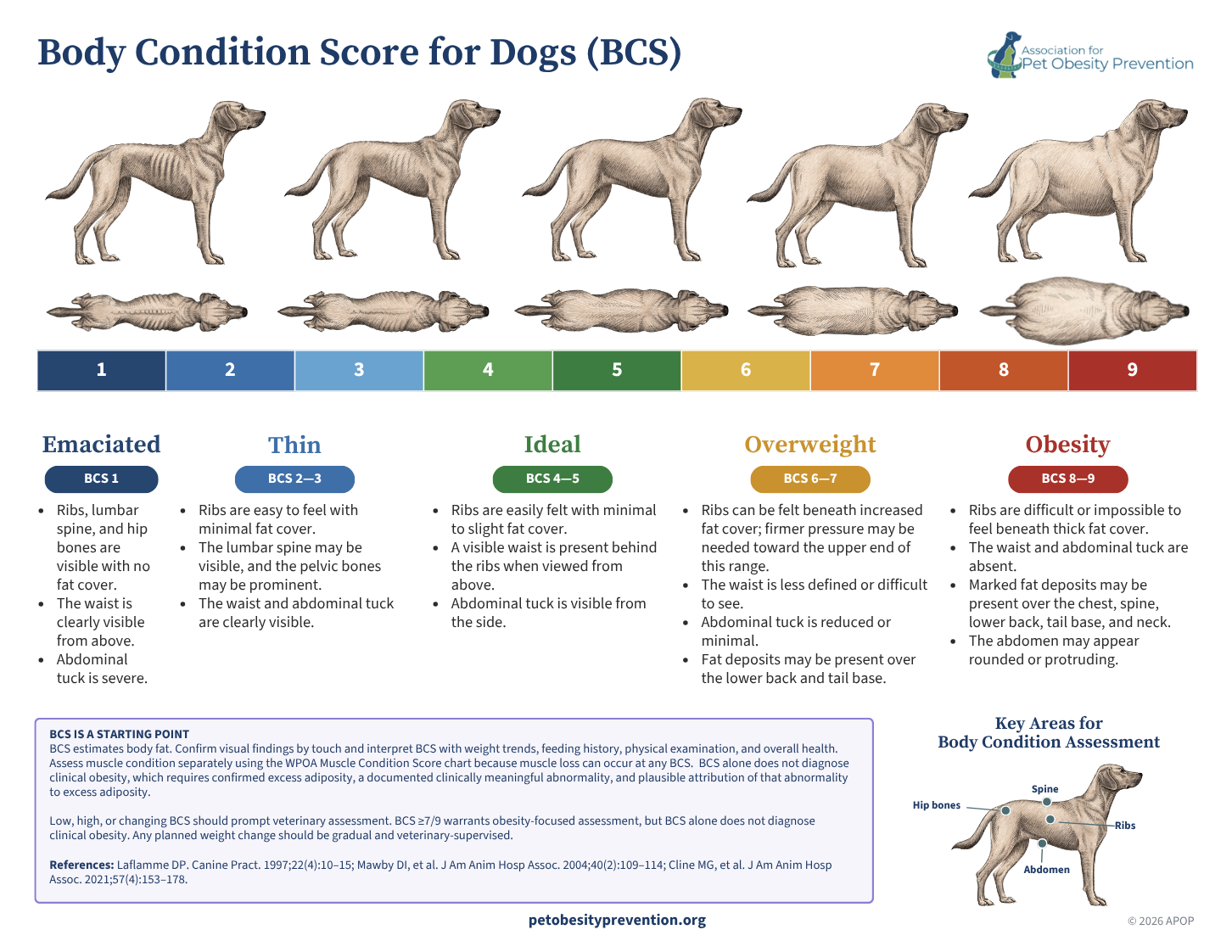
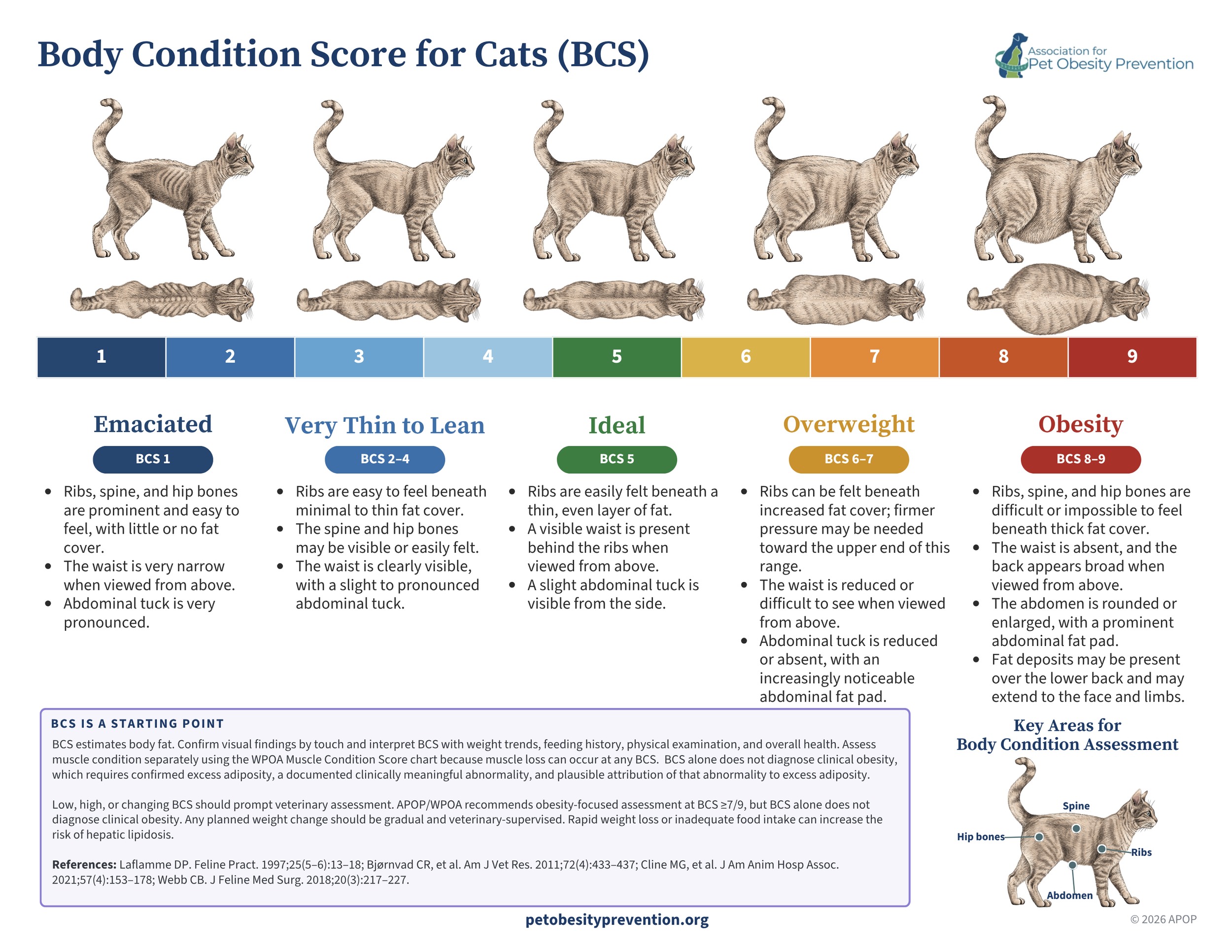
Two dogs of the same weight can have different proportions of fat and muscle. Breed averages and a number on the scales cannot fully describe an individual animal. AAHA recommends assessing body weight, body condition and muscle condition separately.
Body condition score, or BCS, estimates fat cover by looking and feeling. On the common nine-point scale, the ideal range is generally 4–5/9. In an animal in ideal condition, ribs can be felt under a light fat covering, a waist is visible from above and an abdominal tuck is visible from the side. Coat, conformation and species affect interpretation. Ask your vet to demonstrate it on your pet.
Muscle condition is a different assessment. An animal can carry excess fat and still lose muscle, so a reduction on the scales is not automatically a good result. Use the WSAVA nutrition assessment resources together with your vet.
How to start a safe weight-management plan
Begin by recording what your pet actually eats: regular meals, treats, chews, food used in training, table scraps and food from other household members. Record quantities and the food's energy information. Tell your vet about medication, previous diets, appetite and daily activity. For a multi-pet household, consider whether animals can reach one another's bowls.
Kitchen scales are more reliable than a measuring cup for dry food. Pack recommendations are a starting point, not proof of the right portion for your individual pet. Energy needs may change after neutering, so a previously suitable amount can become excessive. These factors are covered in AAHA's obesity prevention guidance.
Your vet can use this information to set a target weight, starting energy allowance and appropriate food. The AAHA weight-reduction plan combines nutrition, suitable activity and monitoring. A formula is only an initial estimate; the plan must respond to the animal's progress.
Simply cutting the usual portion sharply can reduce essential nutrients as well as calories. Therapeutic weight-loss diets are formulated to restrict energy while supplying needed nutrients. Whether one is appropriate depends on health and the degree of restriction.
Never try to make a cat lose weight by fasting. If they stop eating a new diet, contact the vet rather than waiting for hunger to make them accept it.
Track progress while keeping life enjoyable
Agree how often to weigh your pet and when to reassess body and muscle condition. Use the same scales and comparable conditions where possible. Record appetite, activity, tolerance of walks and diet changes alongside weight. A single measurement can fluctuate; adjust portions based on a trend and veterinary advice.
Weight management need not remove every enjoyable activity. Part of the agreed food allowance can be used for training and food toys. Offer social contact, exploration, comfortable walks and play. If pain or poor stamina limits movement, ask your vet what is suitable. Increase activity according to current ability rather than chasing a rapid result.
Short play sessions and opportunities to find measured food can help cats stay active. AAHA's feline fitness advice combines feeding, activity and regular monitoring. Report overly rapid weight loss, reduced appetite or lethargy. Once the target is reached, the maintenance portion still needs to be chosen and checked over time.
Read next
- How to prepare your pet’s records for a vet visit
- How to keep your pet’s medical documents in one place
- How to keep useful pet health observations
- How to prepare for a vet visit with your dog
- Flea, tick and worm prevention for dogs and cats
Russian original. Product availability, parasite risks and veterinary services vary by country. For an individual treatment or prevention plan, consult your local vet.