PET CARE / PETVITALS
How to prepare for a vet visit with your dog
School of Dog Wellbeing · Adapted from Oksana Tyulpinova’s guide · English adaptation: 28 October 2026
A practical guide for caregivers: what to discuss with your vet, how to prepare for procedures, how to support your dog in the clinic and how to follow the treatment plan at home.
Preparation matters for every dog, including dogs that do not growl or bite. A frightened dog may freeze, turn away, hide or try to move away. Continuing while overlooking those responses can increase fear and lead to stronger attempts to defend themselves.
Download the printable checklist (PDF)
A short checklist
- Record changes and their timing. Note eating, sleep, movement, toileting and responses to touch. Bring previous reports and a medication list.
- Choose the right type of help. Ask which clinician you need, how urgent the problem is and whether an in-person appointment is necessary. Remote advice or a home visit may help some dogs, where available and appropriate.
- Tell the clinic about fear and defensive behaviour. Explain previous experiences before anyone approaches the dog.
- Plan the examination. Discuss procedures, duration, positioning, handling and whether food can be used.
- Discuss medication beforehand. If needed, obtain a veterinary plan for pain or anxiety and instructions for any trial dose at home.
- Prepare for the specific procedure. Positioning, handling, a blanket, a muzzle or other equipment should be introduced gradually. Tell the vet if preparation has not been possible.
- Avoid overloading the visit. Ask which tests are needed now and which planned procedures could be separated.
- Plan travel and waiting. Ask about waiting away from a crowded reception area and take a helper if useful.
- Agree roles, breaks and a stop signal. Everyone should understand the plan before handling begins.
- Do not wait for growling or biting. Speak up if your dog tenses, freezes, turns away or tries to leave.
- Check the written treatment plan before leaving. Confirm doses, administration, duration, expected changes and how to contact the clinic. Explain any difficulty carrying out care at home.
Do not delay emergency care to complete training or preparation. Tell the clinic about the dog's condition and handling needs when arranging urgent help.
Prepare the information your vet needs
Describe changes from your dog's normal behaviour
“Less active” is a starting point. Add concrete observations: they used to enjoy walks but now remain in bed, no longer jump onto the sofa, wake at night or avoid touch on a particular body part.
Write down when you first noticed the change, how often it happens and what preceded it. Include appetite, drinking, sleep, movement, urination, stools and social interaction. If you already have a video of unusual behaviour, show it to the vet. Do not deliberately provoke pain or fear to film a response.
Bring previous test results, clinical notes and a medication list. Include the name, dose, frequency and last administration time of each medicine.
Choose a clinician and appointment format
If you are unsure which vet to see, describe the problem when booking and ask for help choosing. A specialist consultation or further tests may be needed.
A remote consultation can sometimes help review history, documents and preparation. A home visit can reduce difficulties with travel and unfamiliar surroundings. Some examinations and procedures need clinic equipment. Ask what can be achieved in the proposed format. Availability of remote care, prescribing and home visits varies by country and practice; the local clinician should confirm what is appropriate.
Set out your questions: What concerns you? What do you need to understand? What difficulties might arise during examination? Describe behaviour through situations rather than labels: “does not allow her hind paws to be touched”, “freezes when someone leans over her” or “grabs a hand when someone tries to place her on her side”.
Prepare your dog and yourself for the procedure
Ask what will happen and practise individual steps
Find out which body parts need examination, whether your dog will need to lie on their side or back, and whether clipping, holding a paw or contact with instruments is planned. Ask how long the position must be maintained and whether food is allowed.
Introduce individual actions before they are needed for treatment. Depending on the procedure and professional advice, preparation may involve a supported position, gentle touch to the paws, abdomen or ears, being carried, a muzzle, or familiar handling equipment. Introduce each element gradually and watch the dog's response. This is preparation, not a reason to force a dog into a position.
For an abdominal ultrasound, for example, the plan might include comfortable positioning, touching and wetting the abdomen, the sound and feel of clippers, and a simulated probe movement. Establish comfort with each stage before joining them into a sequence.
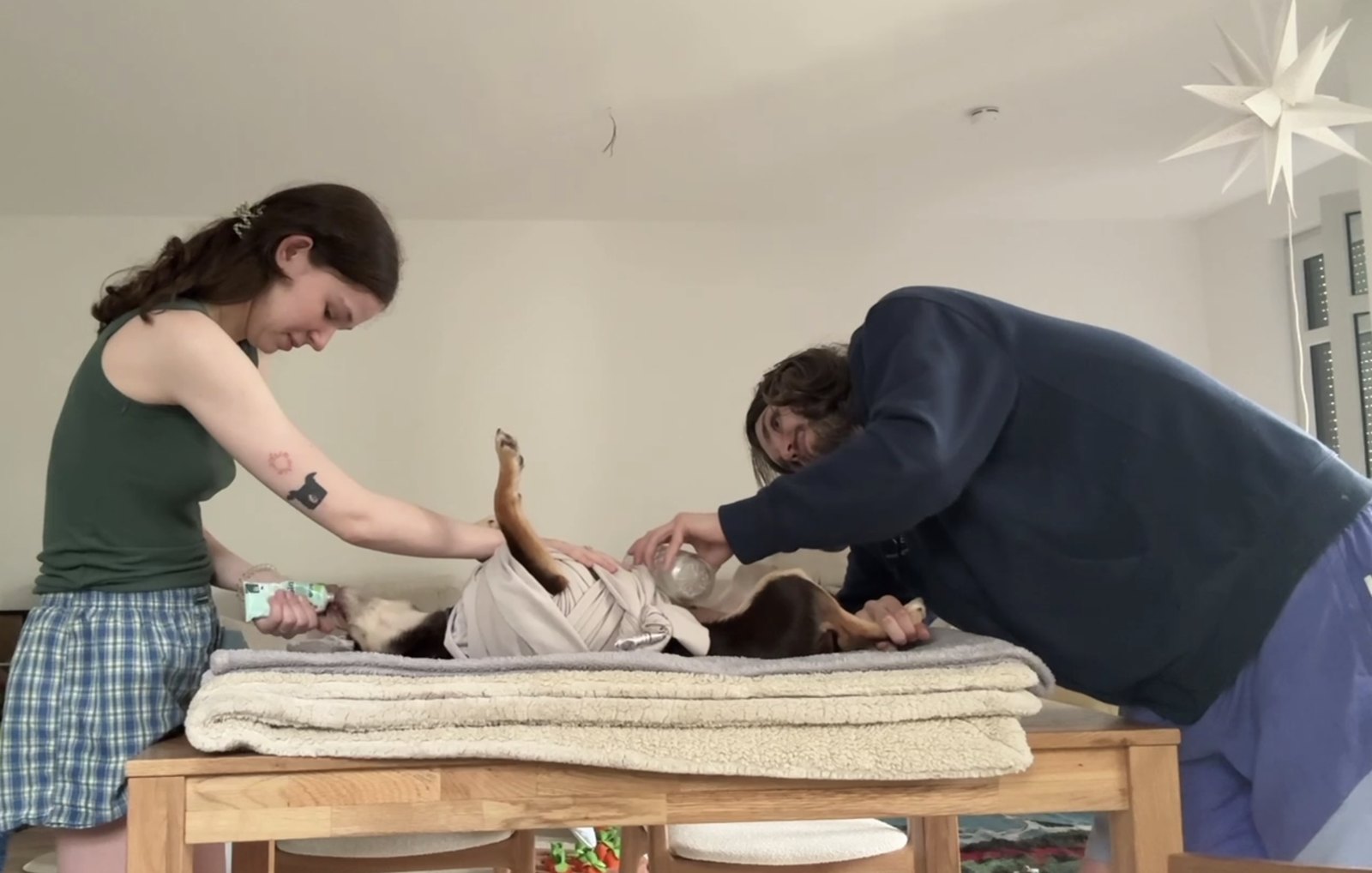
You also need the relevant skills: using a blanket, allowing access to the body part and recognising when to stop. Tell the vet if you do not know how to perform a proposed hold. A first attempt at unfamiliar restraint during an appointment can frighten the dog or cause injury. Ask trained staff to demonstrate a suitable approach.
Pain, anxiety and pre-visit medication
If your dog fears the clinic, reacts painfully to touch or cannot tolerate examination, discuss it before the visit. Pain relief, anxiety medication or sedation may be needed. The vet should choose and prescribe these for the individual dog.
Ask when to give the prescribed medicine, what effect to expect, how long it lasts and which reactions to report. If the vet recommends a trial at home, do it ahead of the appointment and report whether familiar handling became easier, whether fear persisted and whether any unwanted effects occurred. Do not change the dose yourself.
If examination would otherwise require a struggle, discuss a sedation plan and the staff needed to carry it out. For planned care, arranging this before arrival is preferable to improvising during a distressed appointment.
On the day
Leave time for sleep and rest. Avoid unfamiliar exercise or encounters that excite or frighten your dog immediately beforehand, and allow recovery time after a walk.
Confirm food and water instructions for the particular examination. If food is allowed, bring familiar treats. Pack a non-slip mat, familiar walking equipment and any handling equipment the dog is already comfortable with. Do not fast your dog unless the clinic has instructed you to.
If several non-urgent procedures are planned, discuss splitting them into separate visits. A helper can be useful if it is hard to support the dog, talk to the vet and organise paperwork at the same time.
Support your dog in the clinic
Waiting and getting used to the room
Ask whether you can wait outside the busy reception area and go straight into a room. If you wait in a vehicle, ensure safe temperature, ventilation and supervision. A crowded lobby with other animals and narrow passageways may heighten fear before the examination starts.
Do not let unfamiliar people touch your dog or lead them up to other animals. Choose enough distance for the dog to stay with you without hiding, trying to leave or defending themselves.
For a planned appointment, allow time to explore the room, in agreement with staff. The original guide suggests at least five minutes as a starting point, but the dog may need longer and clinical urgency comes first. While they settle, discuss the history and proposed actions. Avoid rushing with commands or using food to lure a reluctant dog into contact with the vet.
Examination and handling
Before examination, explain whether the vet can approach, how your dog responds to touch and what frightens them. Agree who will initiate contact. Some dogs can interact directly with the clinician; others cope better with caregiver support and preparation for each touch.
Decide who positions and supports the dog, who performs the procedure and who watches their responses. Agree a stop signal beforehand. Handling should use the least restriction needed for safe care.
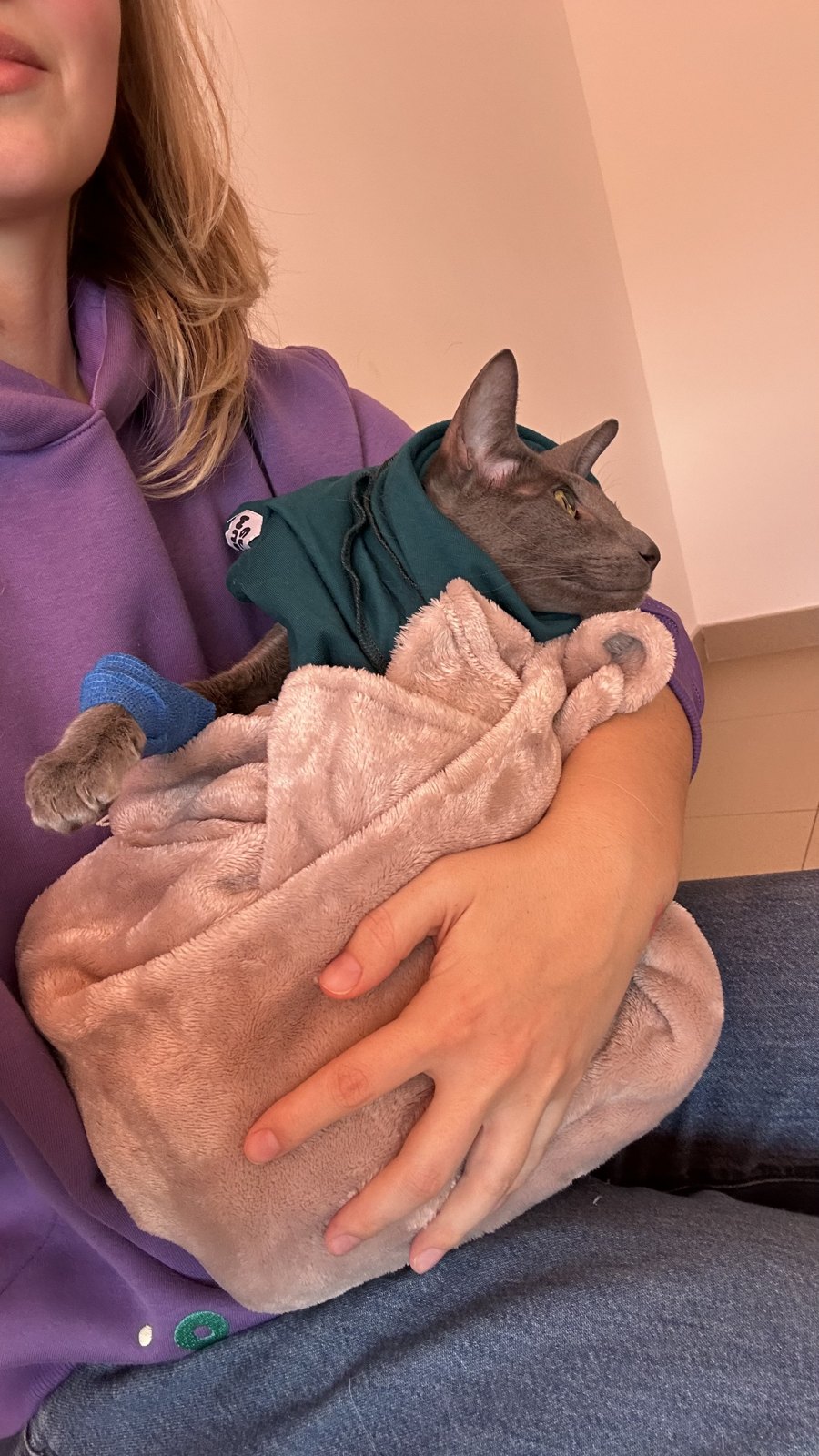
Discuss the surface and position. A large dog may be more comfortable on a non-slip floor. A smaller animal may tolerate an examination with caregiver support if the vet can safely reach the necessary area. A table is not automatically the best location for every examination.
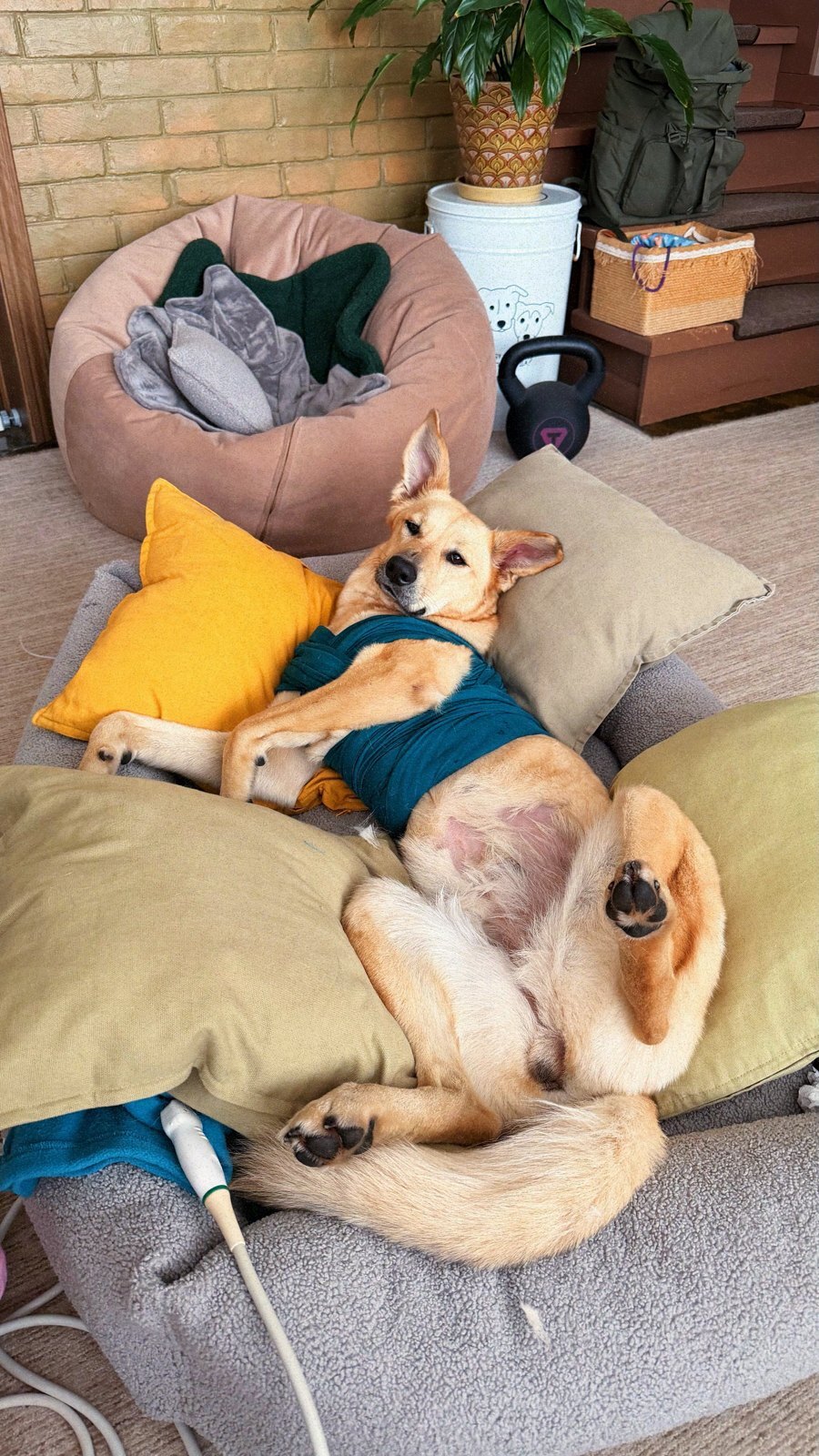
Prepare familiar blankets and supports in advance. Blanket restraint takes skill; unfamiliar tight wrapping can increase fear. A fabric cover or snood is not suitable for every dog and must never compromise breathing, temperature control or the clinician's ability to monitor the animal. If the proposed handling is unfamiliar or distressing, ask for a different plan; sedation may be more appropriate.
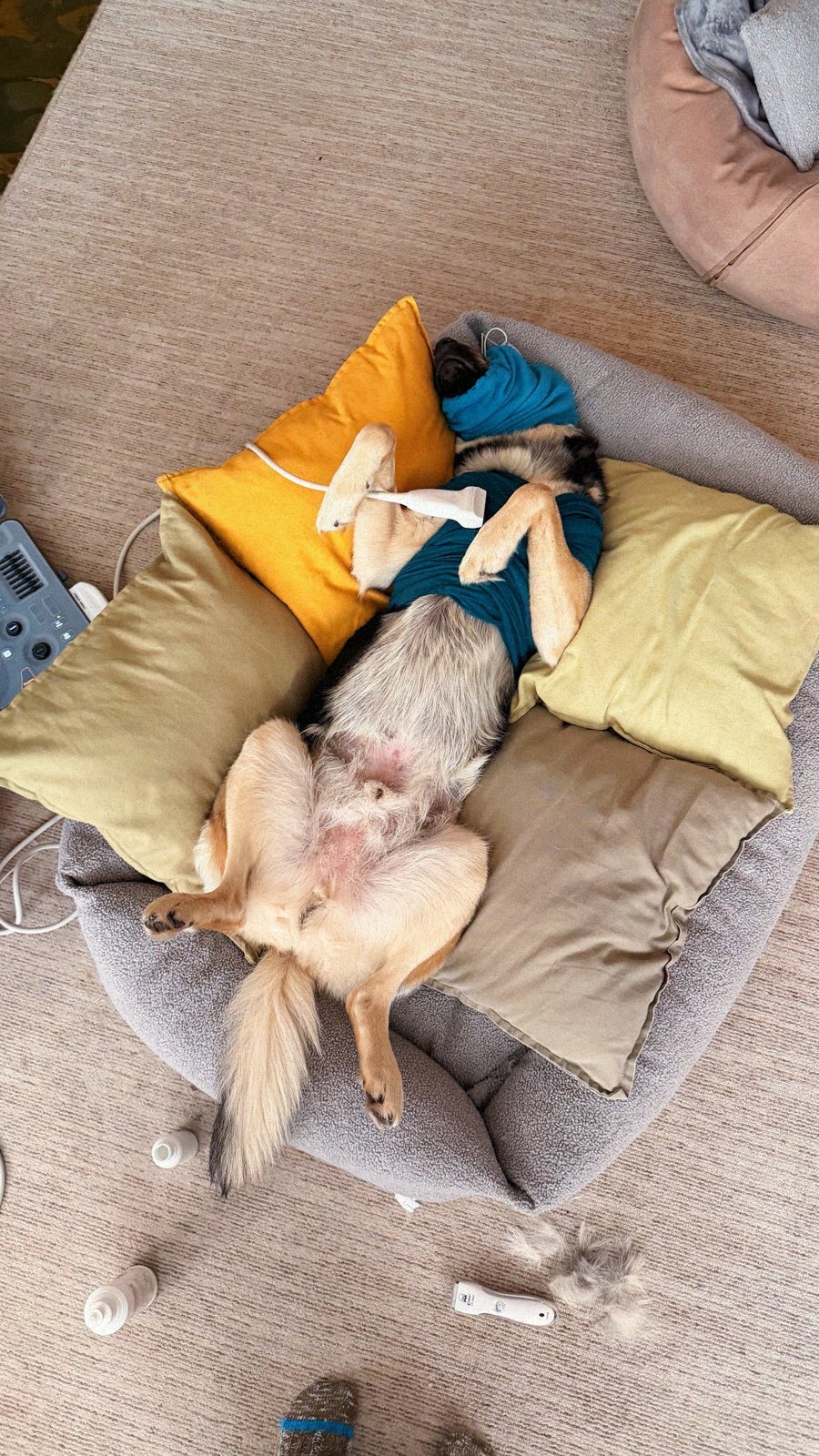
Take breaks and change the plan when needed
Offer breaks before resistance or distress escalates. Pause after an individual action and allow recovery. Do not combine several procedures simply because the dog can still be held.
Watch for tension, freezing, turning the head away, moving away, hiding a body part or trying to leave. Tell the vet when these signs appear or intensify. A quiet dog can still be very frightened. If subtle responses repeatedly fail to stop an unpleasant action, the dog may progress to growling, lunging or biting. Do not wait for that point to speak up.
You can say:
- “Please do not touch her yet. Can we discuss how to examine her first?”
- “She has frozen and is turning away. Can we pause?”
- “I do not know how to hold her that way.”
- “We cannot continue like this. What other options do we have?”
If the dog resists, stop the procedure safely with the clinical team. Do not suddenly release a hold while the vet is using a needle or another instrument: first coordinate a safe stop.
Discuss a different position or handling method, fewer procedures, pain relief or sedation. If a non-urgent procedure cannot be completed without a struggle, agree preparation and a new appointment. Before leaving, ask what to do meanwhile and which changes require earlier attention.
Follow the plan at home and prepare for next time
Check before leaving the clinic
Obtain written instructions. For each medicine, confirm its name, formulation, dose, route, frequency and course length. If the prescription, packaging and verbal explanation differ, clarify before giving it.
Ask what improvement to expect and when, when follow-up is needed and how to send test results. Clarify which reactions require contacting the vet and which need immediate help. If a home procedure is required, ask for a demonstration and a sequence you can follow.
Explain practical limits immediately: your dog may not allow their mouth to be opened or an ear touched, or may not stay in the required position; you may not be able to give injections or handle the dog alone. The vet needs this information when choosing treatment.
If home care is not working
Contact the vet and describe the specific difficulty. A different formulation, administration method, help at the clinic or further preparation may be needed. Do not keep repeating a frightening procedure through a struggle. This can make treatment and future visits harder.
Do not independently substitute medication, change a dose or stop a course. Agree changes with the vet. Record what you managed to do, when medicines were given and how the dog responded. This helps the clinician assess and adjust treatment.
Before the next visit, review what happened: which positions were comfortable, when fear increased, whether breaks were sufficient and how pre-visit medication worked. Share this with the clinic beforehand.
Resume preparation at home once your dog has recovered, focusing on the actual actions needed next time. Agree the appointment date and preparation with the vet.
Adapted from the School of Dog Wellbeing guide by Oksana Tyulpinova, its founder and an animal behaviour professional. The original describes her experience helping organise veterinary care for animals that find handling difficult. This English edition is an editorial adaptation, not a claim of veterinary review.
Read next
- How to prepare your pet’s records for a vet visit
- How to keep your pet’s medical documents in one place
- How to keep useful pet health observations
- Flea, tick and worm prevention for dogs and cats
- Why excess weight matters for dogs and cats
Russian original. Product availability, parasite risks and veterinary services vary by country. For an individual treatment or prevention plan, consult your local vet.